Three Layers, One System: How Care Orchestration Completes Existing Oncology Infrastructure
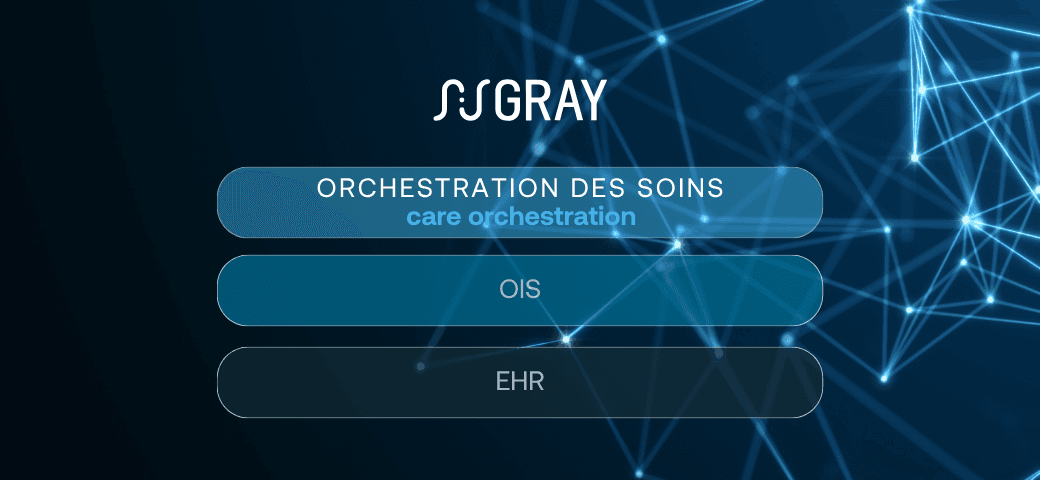
Over the past decade, most oncology departments have made significant investments in digitizing their operations. OIS and EHR platforms are now deeply embedded in clinical workflows. The data they hold, treatment protocols, clinical constraints, patient records, scheduling rules, represents years of configuration and institutional knowledge.
For most cancer centers, that investment is not something to rebuild. It is something to build on. Years of clinical configuration, integration, training, and operational trust live inside their existing systems. Reworking those layers, even partially, has real implications for care continuity, and risks making years of investment feel like wasted effort.
But a gap remains. Continuously balancing patient demand against finite capacity across departments, in real time, is a problem that neither OIS nor EHR platforms were designed to solve. That work sits at a different layer of the operation. The question is how to address it in a way that builds on what already works.
The answer is architectural.
What OIS and EHR Systems Were Built for
Oncology Information Systems like MOSAIQ and ARIA were built for treatment delivery and clinical safety. They track every fraction of radiation delivered, enforce clinical constraints, and maintain the integrity of the treatment record. They are indispensable to cancer care.
Electronic Health Records like Epic and Cerner were built for documentation and billing. They hold the longitudinal patient record and anchor the administrative workflow of the institution.
Both have added scheduling capabilities over time. Both are market standard. Both are essential. Neither was designed to continuously balance patient demand against finite capacity across departments, in real time. That work sits at a different layer of the operation.
The Third Layer: Care Orchestration
Care orchestration is the operational layer that sits above existing clinical systems, reads the data they already contain, and continuously manages the capacity-demand equation across departments.
It does not replace the OIS or the EHR. It complements them by owning the problem they were never designed to solve: continuously allocating patients to constrained resources, rebalancing when conditions change, and giving operations leaders the real-time visibility they need to manage proactively rather than reactively.
This is the additive approach to infrastructure. Three layers, each with a clear and distinct role:
The EHR layer holds the longitudinal patient record, supports documentation, and anchors billing.
The OIS layer manages treatment delivery, enforces clinical constraints, and maintains the integrity of the treatment record.
The care orchestration layer reads across both systems, applies operational rules, and continuously rebalances capacity across departments as conditions change.
Each layer does what it was designed to do. None replaces the others.
Why Additive Infrastructure Matches how Oncology Operations Evolve
Cancer care operations grow in complexity year over year. Treatment protocols multiply touchpoints. New modalities expand what departments deliver. Patient volumes that surpassed pre-pandemic levels have not come back down.
In this environment, the operational knowledge encoded in existing systems becomes more valuable, not less. Years of clinical workflow configuration, calibrated rules, and team familiarity represent a real asset for cancer centers. The strategic question is how to extend that asset rather than rebuild it.
That is what additive infrastructure is designed for: addressing what is structurally missing without disturbing what already works.
A Vendor-Agnostic Approach
GrayOS is a care orchestration platform built on this principle. It is vendor-agnostic by design. Whether the OIS is MOSAIQ or ARIA, whether the EHR is Epic, Cerner, or another platform, GrayOS adapts to what the department already runs on.
It is currently deployed in oncology departments across Canada, the United States, and France, in centers using a range of OIS and EHR combinations. In most cases, the clinical systems remain in place. The orchestration layer adds what was structurally missing above them.
A Different Problem Requires a Different Layer
The question for cancer center leaders is not whether their existing systems are working. In most cases, they are. The question is what infrastructure looks like when the operational complexity of oncology departments exceeds the scope these systems were originally designed for.
That gap is structural. And a structural gap is best addressed by adding the layer that was missing, not by replacing the layers that work.